
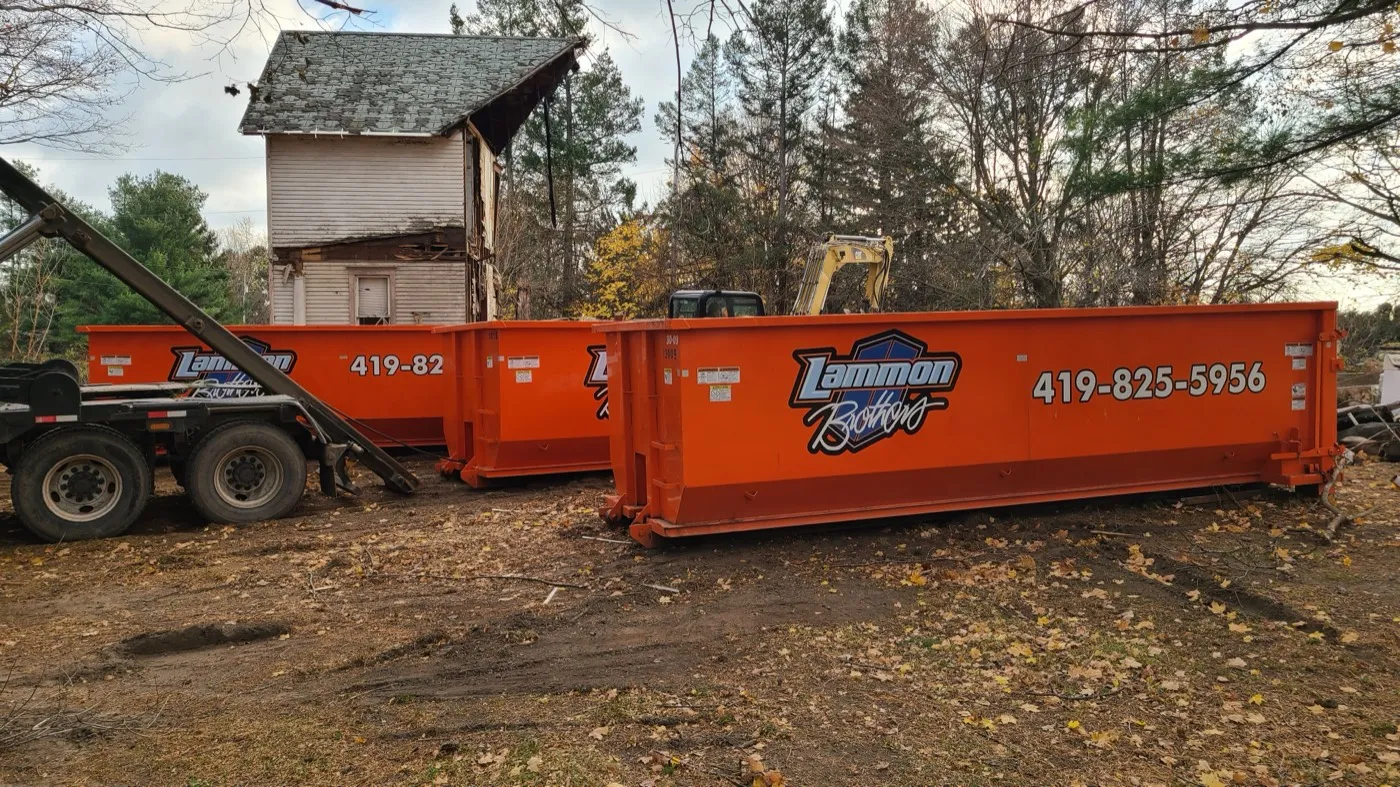
For a typical single-layer asphalt shingle tear-off, a 20-yard handles most houses, and a 15-yard works for a smaller roof or a garage. The reason dumpster size for roofing isn't just about how big the pile looks is that shingles are heavy. You hit the weight limit long before you run out of room, so picking by square footage and layers matters more than picking by volume alone.
Here's the rule of thumb roofers use, and then the part nobody warns you about.
The square-footage rule of thumb
Roofers measure in squares. One square is a 10 by 10 foot patch, so 100 square feet of roof. To size your dumpster, figure out roughly how many squares you're tearing off, then count how many layers of old shingles are up there.
A loose guide for a single layer of asphalt shingles:
- Up to about 15 squares (1,500 sq ft): a 15-yard usually covers it
- 15 to 25 squares: a 20-yard is the safe bet for most homes
- 25 to 30 squares, or a steep roof: step up toward a 30-yard
If your roof has two or three layers of old shingles to come off, double or triple your estimate. Two layers on a 20-square roof is closer to 40 squares of debris, and that changes your answer fast.
Why shingles are sneaky heavy
A bundle of asphalt shingles weighs in the neighborhood of 60 to 80 pounds, and there are three bundles to a square. That adds up in a hurry. A tear-off pile that doesn't even look full can already be too heavy to legally haul.
This is the trap with roofing debris. With a load of couches and cardboard, you fill the dumpster to the top and you're fine. With shingles, you'll often hit the weight ceiling with the dumpster only half or two-thirds full. Loading them flat and even helps, but you can't out-pack physics. Roads and trucks have weight limits, and we have to stay under them.
So the practical move is to not max out the volume. Leave yourself margin, especially on a multi-layer tear-off where the weight stacks up.
A note on the 40-yard
People sometimes assume the biggest dumpster is the answer for a big roof. It's not always. Our 40-yard has a 9-ton weight limit, and a roof full of shingles can run you into that limit before the dumpster is anywhere near full. You'd be paying for cubic yards you can't use.
For a large or multi-layer tear-off, two well-loaded smaller dumpsters, or one right-sized dumpster that you don't overfill, often works out better than one giant container that you can only fill partway. We're happy to talk through which way makes sense for your roof.
Don't forget the extras
A tear-off isn't only shingles. You're also pulling off:
- Underlayment and old felt paper
- Rotted decking or sheathing you replace
- Drip edge, flashing, and old vents
- A lot of nails
That ancillary debris adds volume and a bit more weight, so factor it in when you're deciding. When in doubt, the cleaner move is to size up one notch rather than risk a second haul.
One thing to keep separate: if your roof is old enough that asbestos is a concern, that can't go in the dumpster. Asbestos needs specialized handling. Our acceptable items page covers what's a no-go.
Quick recap
Most single-layer asphalt tear-offs on an average house land on a 20-yard. Smaller roofs and garages drop to a 15. Multi-layer or steep roofs climb toward a 30, with weight, not just volume, driving the call. And don't reach for the 40 by reflex on a heavy shingle load, since the weight limit will get you first.
You can compare all the sizes and what they hold on our dumpster rental page. Tell us your rough square footage and how many layers are coming off, and we'll match you to the right dumpster. Call (419) 825-5956 to get your roofing dumpster scheduled.
Need a dumpster or a load of materials?