
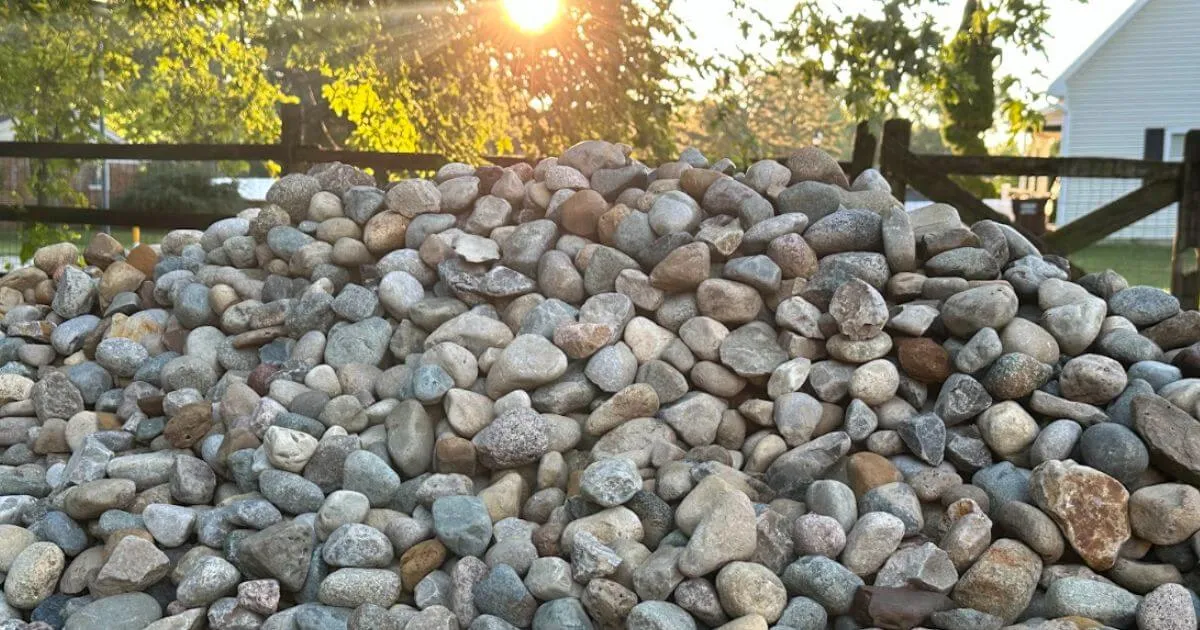
River rock and pea gravel are both smooth, both come in a range of natural colors, and both get poured into a lot of the same projects around here. The difference that matters is size. River rock runs bigger and bolder, pea gravel runs small and underfoot-friendly. Sorting out river rock vs pea gravel mostly comes down to whether you're going to look at the stone or walk on it.
Both are sold by the ton at the yard, and we deliver within 25 miles of Delta or you can pick up. Here's how to tell which one belongs in your project.
Size and look
Pea gravel is the small stuff, usually around the size of a pea up to maybe a half inch. The pieces are rounded and they come in soft grays, tans, and browns mixed together. It reads as a fine, even surface from a few feet away.
River rock is the chunkier cousin. The stones run from an inch up to several inches across, with more visible color variation, grays and browns and the occasional reddish piece. Because the stones are bigger, you notice them individually. That's exactly why people use it where they want the stone to be part of the design, not just a background.
If you want a clean, uniform texture, pea gravel. If you want visual weight and a more rugged, natural look, river rock.
Walkability
This is where the two really split.
Pea gravel is comfortable to walk on. The small stones shift a little underfoot but they pack into a reasonably stable surface, which is why it's a favorite for footpaths, patios, and play areas. It does migrate, so you'll want edging to keep it where you put it.
River rock is not a walking surface. The big stones roll under your feet and they're tough on bare feet and lawnmower wheels alike. Nobody enjoys crossing a bed of river rock. So if people are going to be on it regularly, that's a strike against it.
Drainage
Both drain well because they're loose stone with gaps between the pieces, which is a big reason folks reach for either one in wet spots and around downspouts.
River rock has the edge for heavy drainage. The bigger stones leave bigger gaps, so water moves through fast and the rock doesn't wash away in a downpour the way smaller material can. That makes it a solid pick for dry creek beds, drainage swales, and the splash zone under a downspout. Pea gravel drains fine for most beds and borders, but in an actual water channel the small stones can shift and travel.
Cost and coverage
Both are priced by the ton, and what you'll spend comes down to how much area you're covering and how deep. A 2 to 3 inch layer is typical for a decorative bed, and a ton of either covers a similar footprint at that depth. River rock and pea gravel are in the same general neighborhood on price, so the choice is about fit, not budget. You can see what we stock and get current pricing on our stone page.
To estimate, measure your area in square feet, settle on a depth, and we'll help you figure the tonnage when you call. Ordering a touch extra is smart so you're not short on the last few feet.
Which one wins
Here's the simple version:
- Decorative beds, borders, and accents around the foundation: river rock, when you want it to stand out, or pea gravel for a tidier look
- Paths, patios, and play areas: pea gravel, because you can actually walk on it
- Drainage channels, dry creek beds, and downspout splash zones: river rock, for the better water flow and staying power
- A clean, low-key ground cover: pea gravel
Plenty of yards use both. River rock in the drainage areas and big accent beds, pea gravel on the paths between them. If you're weighing stone against other ground covers, our full materials lineup lays out the options.
Not sure which fits your spot? Tell us what you're building and we'll point you the right way. Call (419) 825-5956 to talk it through or set up delivery.
Need a dumpster or a load of materials?