
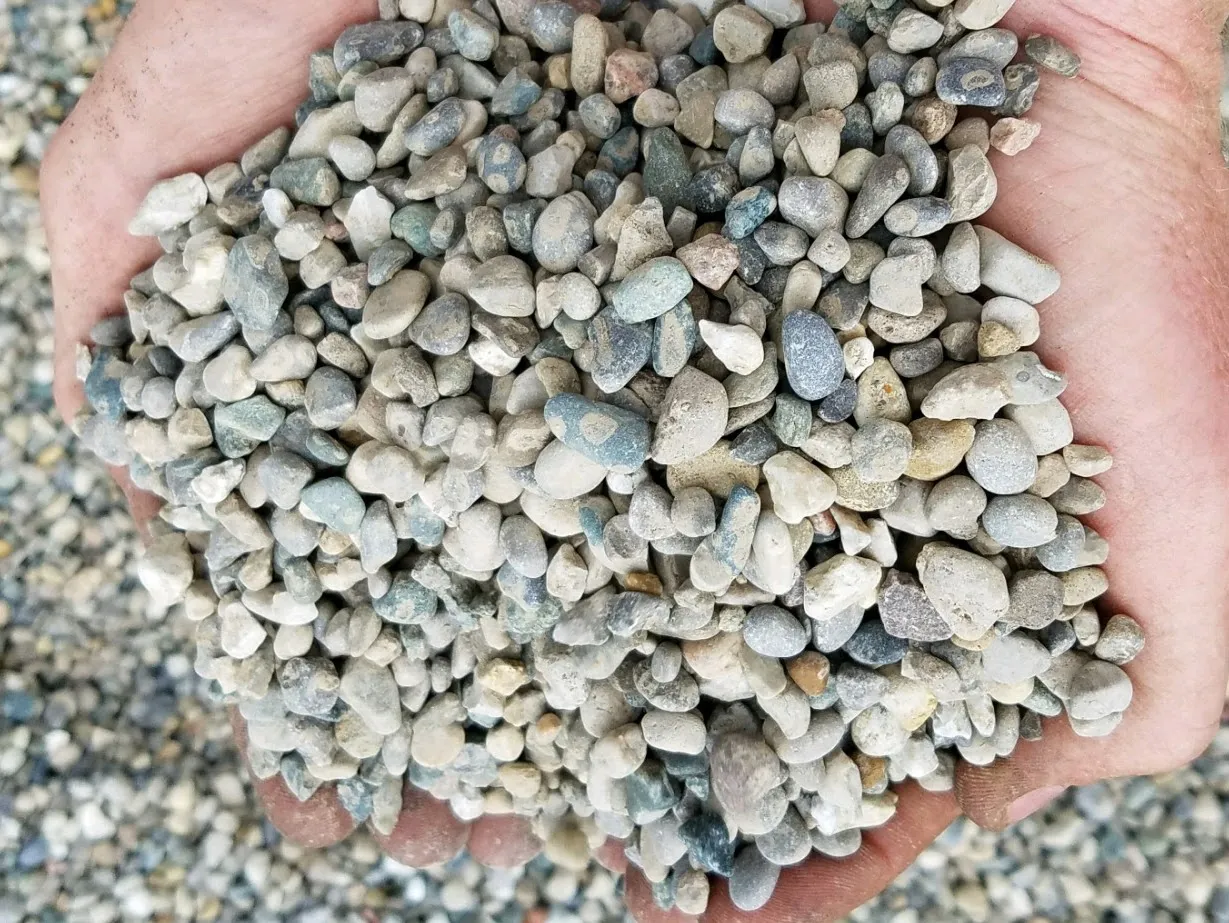
If you're building a gravel driveway, you start with #304 on the bottom and finish with #411 on top. That's the heart of the limestone 411 vs 304 question. Both are crushed limestone with stone dust mixed in, both pack down hard, and that's what makes them driveway material instead of decorative stone. The difference is the size of the pieces, and that's what decides which layer each one belongs in.
We sell both by the ton at the yard, and deliver within 25 miles of Delta or you can pick up.
What they have in common
The reason these two work for driveways and decorative stone doesn't is the fines. Both #304 and #411 include stone dust, the powdery crushed material that fills the gaps between the larger pieces. When you spread the stone and run over it or roll it, those fines lock everything together into a firm, stable surface that sheds water and holds up under vehicle weight.
Clean stone with no fines, the kind you'd use for drainage, stays loose forever and ruts under tires. You don't want that for a driveway. You want material that compacts, and both of these do.
#304: the base layer
Number 304 is the coarser of the two. It's a mix of larger crushed stone, up to roughly an inch or so, blended with fines. Those bigger chunks give it the structure and load-bearing strength you want at the bottom of a driveway.
This is your foundation layer. It bridges over soft spots in the dirt, carries the weight, and builds the driveway up to grade. On a fresh driveway, this is where you start. Think of it as the bones of the thing.
#411: the top layer
Number 411 is finer. The largest pieces are smaller than in #304, and there's a higher proportion of fines, so it packs down into a smoother, tighter surface. That's exactly what you want on top, where the tires actually ride.
A driveway finished in #411 is more comfortable to drive and walk on, sheds water well, and looks cleaner than coarse base stone left exposed. It's also the right choice for refreshing a driveway that's gotten thin or rutted, since you can spread a fresh layer over what's already there.
How to layer them
For a new driveway, the order is straightforward:
- Bottom: 4 to 6 inches of #304 for the base, more if the ground is soft
- Top: 2 to 3 inches of #411 as the driving surface
For a driveway that already exists and just needs help, you usually skip the #304 and add a couple inches of #411 to even out ruts and freshen the surface. If the base has failed and you're sinking into mud, that's when you go back to #304 first.
A quick tip on installation: on a brand-new driveway or on a hot day, lay boards down for the delivery truck. Fresh asphalt and soft ground both mark up easily under a loaded truck, and a few boards save you the headache.
How much do you need?
Figure your area in square feet, multiply by your depth in feet, and that gives you cubic feet. Since this material is sold by the ton, give us those numbers and we'll convert it for you. As a rough feel, a typical two-car driveway takes a few tons of base plus a couple tons of top, depending on length and how deep you're going.
Order a little extra. Stone settles into the dirt as it packs, and you'll want enough to cover the low spots on the first pass.
You can see #304, #411, and the rest of what we carry on the stone page, and the full materials lineup if you're sorting out other parts of the project. If you want a hand figuring tonnage or you're ready to set up delivery, call us at (419) 825-5956 and we'll get you the right stone.
Need a dumpster or a load of materials?